
Grub Control in Carrollton: How to Stop Root Damage Before It Destroys Your Lawn
If your Carrollton lawn suddenly turns brown in late summer, feels spongy underfoot, or peels up like loose carpet, you may not have a watering problem — you may have a grub infestation.
In North Texas, white grubs are one of the most destructive turf pests. According to the Texas A&M AgriLife Extension Service, grub populations can severely damage warm-season grasses like Bermuda and St. Augustine when left untreated. Once roots are destroyed, irrigation cannot save the lawn. This is why effective pest control in Carrollton, TX must include soil-level lawn protection — not just perimeter spraying. Want the full breakdown of what’s attacking Carrollton turf (including grubs, chinch bugs, armyworms, and fire ants)? Read our complete guide: How Lawn Insects Destroy Carrollton Lawns.
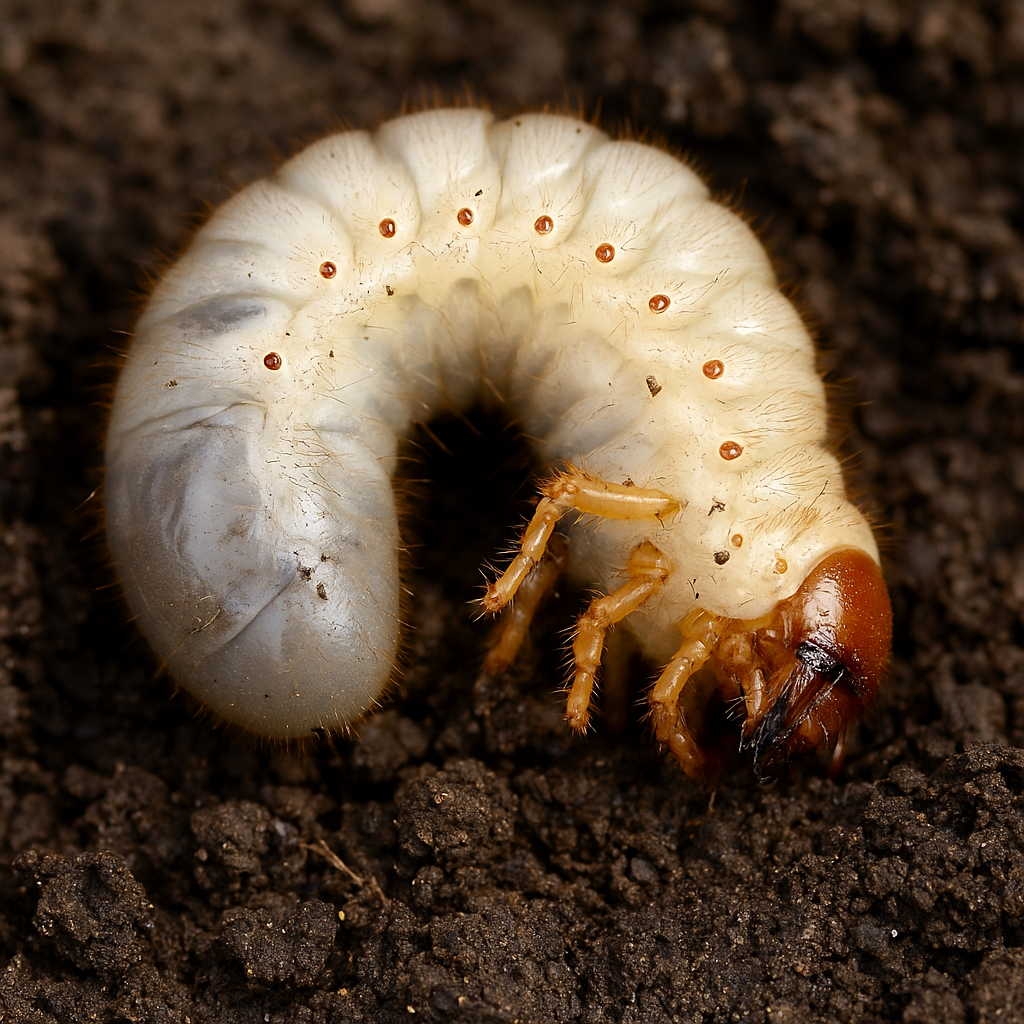
White grubs are the larval stage of several beetle species, including June beetles and masked chafers. After adult beetles lay eggs in turf during late spring and early summer, the larvae hatch and begin feeding on grass roots.
They live just beneath the soil surface and feed aggressively during peak heat months.
Why They’re So Damaging
Grass survives by absorbing water and nutrients through its root system. Grubs chew through that system. Once enough roots are destroyed:
- Grass cannot absorb water
- Turf wilts even with irrigation
- Sod detaches from soil
- Entire sections collapse
In heavy infestations, lawns can be rolled back like a rug.
Why Grubs Are Common in Carrollton, TX
Carrollton lawns create the perfect environment for grub development:
- Clay-heavy soil retains moisture
- Irrigation systems keep turf hydrated
- Warm summers accelerate larval feeding
- Dense neighborhoods increase beetle activity
Neighborhoods like Country Place, Rosemeade, Carillon Hills, and Nob Hill often see predictable late-summer grub pressure.
Because beetles are attracted to well-maintained lawns, healthy suburban properties are actually prime targets.
Signs of Grub Damage in Carrollton Lawns
Many homeowners mistake grub damage for drought stress.
Here’s how to tell the difference:
1. Turf Lifts Easily
Grab a brown patch and gently pull. If it peels back with little resistance, roots are gone.
2. Spongy Feel Underfoot
Walking across the lawn may feel soft or unstable.
3. Wildlife Digging
Raccoons, skunks, and birds dig aggressively when grubs are present.
4. Brown Patches in Late Summer
Damage usually peaks August–September in North Texas.
If you see multiple symptoms, grub treatment is likely needed. Not sure if it’s grubs or something else? Here’s a side-by-side breakdown of the most common culprits in Carrollton lawns.
The Grub Life Cycle in North Texas
Understanding timing is key to effective control.
Late Spring: Adult beetles lay eggs
Early Summer: Eggs hatch
Mid–Late Summer: Larvae feed aggressively
Fall: Larvae burrow deeper
Winter: Dormancy
Spring: Resume feeding before pupating
The most effective preventative treatments are applied before peak feeding begins.
Preventative vs Curative Grub Treatment
There are two main strategies:
Preventative Treatment
Applied late spring or early summer
Targets newly hatched larvae
Prevents large-scale root damage
Curative Treatment
Applied once damage is visible
Targets active feeding grubs
Stops further root destruction
Preventative applications are significantly less expensive than replacing sod.
Why Fertilizer Alone Won’t Fix Grub Damage
Many homeowners attempt to fertilize when they see brown patches.
But fertilizer feeds grass — it does not eliminate larvae.
According to the Environmental Protection Agency, effective turf insect control requires targeted intervention based on pest identification and life cycle timing.
Without insect control, root destruction continues underneath fertilized grass.
How Grub Damage Increases Structural Pest Pressure
Here’s where most pest companies miss the connection:
Root-damaged lawns:
- Hold excess moisture
- Increase soil instability
- Create organic decay zones
- Attract ants and other secondary pests
When turf health collapses, pest pressure often shifts toward the foundation.
This is why Titan Pest Defense treats lawns as part of an exterior-first pest strategy — not as a separate service.
Healthy soil reduces pest migration.
What Happens If Grubs Go Untreated?
Severe infestations can lead to:
- Full lawn replacement
- Expensive sod installation
- Increased weed invasion
- Long-term soil compaction
Recovery can take an entire growing season.
Preventative lawn insect control in Carrollton costs far less than restoration.
When to Schedule Grub Control in Carrollton
For most Carrollton lawns:
Preventative Window: Late May – Early July
Inspection Window: July – August
Curative Window: August – September
Waiting until September often means roots are already gone.
The Titan Approach to Grub Control in Carrollton
Titan Pest Defense integrates grub monitoring into broader lawn protection programs.
Instead of reacting to visible damage, treatment is based on:
- Seasonal timing
- Turf condition
- Irrigation patterns
- Neighborhood pest pressure
This ensures control before catastrophic root loss occurs.
FAQ: Grub Control in Carrollton, TX
How do I know if my Carrollton lawn has grubs?
If brown patches lift easily and feel spongy, or if wildlife is digging in your yard, grubs are likely present. Inspecting the soil beneath damaged turf confirms infestation.
When is the best time to treat for grubs in Carrollton?
Late spring to early summer is ideal for preventative treatment. Curative treatments are effective during active feeding in late summer.
Can my lawn recover from grub damage?
If caught early, turf can recover with proper treatment and irrigation. Severe root destruction may require sod replacement.
Are grub treatments safe for pets?
Professional treatments, when applied correctly and allowed to dry, are safe for pets and families.
Do grubs come back every year?
Without preventative treatment, beetles may lay eggs annually, leading to recurring infestations.
This is paragraph text. Click it or hit the Manage Text button to change the font, color, size, format, and more. To set up site-wide paragraph and title styles, go to Site Theme.
If you’re seeing thinning turf, dead patches, or recurring insect pressure, start here: How Lawn Insects Destroy Carrollton Lawns — then check out our Lawn Pest Control in Carrollton, TX service for soil-up protection.